
Nixtamalization: The Technology That Fed a Civilization
- The Epicurer

- hace 2 días
- 2 min de lectura
History tends to celebrate spectacular inventions. The wheel. The compass. Printing. Steam.
Far less attention is given to the quiet discoveries that transformed everyday life so completely they became invisible. Yet some of humanity's greatest innovations were never monumental. They happened around a fire, inside a clay vessel and through careful observation repeated across generations.

Nixtamalization is one of them. More than three thousand years ago, communities throughout Mesoamerica discovered that cooking maize in an alkaline solution, traditionally water mixed with limestone, fundamentally changed the grain. It softened its structure, released nutrients otherwise unavailable to the human body, improved flavour, extended versatility and transformed maize into a food capable of sustaining entire civilisations.
No written chemistry explained the process.
No laboratory measured its effects. There were no scientific journals or universities to validate the discovery. Instead, generations observed, refined and transmitted knowledge until it became tradition.
The elegance of nixtamalization lies precisely in this relationship between experience and science. Long before vitamins had names, the process made niacin biologically available, preventing nutritional deficiencies that later appeared in regions where maize was adopted without the accompanying technique. What modern nutrition would eventually explain had already been understood through practice.
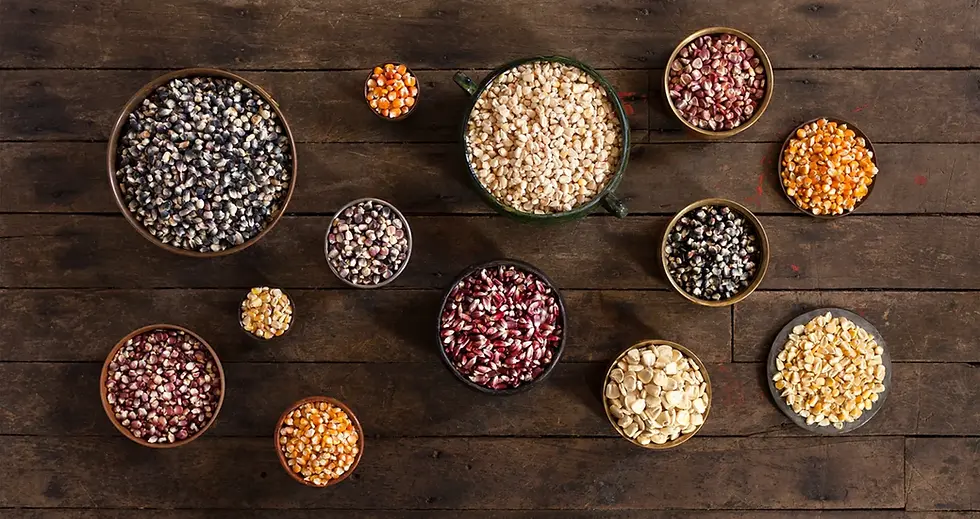
This is one of history's quietest demonstrations of human intelligence. Too often traditional knowledge is described as primitive simply because it emerged without modern institutions. Yet nixtamalization reveals the opposite. It reflects centuries of experimentation conducted not in laboratories but in kitchens, villages and farming communities. Its sophistication resides in accumulated observation rather than technological complexity.
Today the tortilla has become one of the world's most recognisable foods. Yet what deserves equal admiration is not only the finished product, but the invisible knowledge embedded within it.
Every tortilla carries thousands of years of empirical science. Perhaps that is the true meaning of culinary heritage.
Recipes alone are never enough. What matters is the understanding that accompanies them. A civilisation preserves itself not merely by repeating actions, but by transmitting the reasoning behind those actions, even when that reasoning is expressed through practice rather than theory. Nixtamalization belongs to a remarkable family of traditional techniques found across the world. Fermentation in Europe, koji in Japan, bread leavening in the Middle East or cheesemaking in the Alps all reveal societies learning to collaborate with biology rather than dominate it. These were technologies before the word technology existed.
In an age increasingly fascinated by innovation, it is worth remembering that some of humanity's greatest breakthroughs occurred long before industrialisation.
Progress is not always the invention of something entirely new.
Sometimes it is the patient refinement of something already present in nature.
Perhaps that explains why nixtamalization continues to feel so profoundly contemporary. It represents efficiency without waste, science without arrogance and sophistication without unnecessary complexity.
The process has endured for millennia because it solved a problem completely.
Some technologies become obsolete.
Others become civilisation itself.
Nixtamalization belongs firmly to the latter.


