
Ginori 1735, the Discipline of Continuity

Heritage, when genuine, is never decorative. It is structural.
Founded in 1735 near Florence, Ginori 1735 did not emerge from fashion or commerce, but from inquiry. Marquis Carlo Ginori was not seeking to imitate Chinese porcelain—he sought to understand it. The early years of the Manifattura di Doccia were marked by experimentation, failures, reformulations, and an almost scientific obsession with matter. What survived was not a style, but a method. Porcelain, at Ginori, was never treated as surface. It was treated as language.
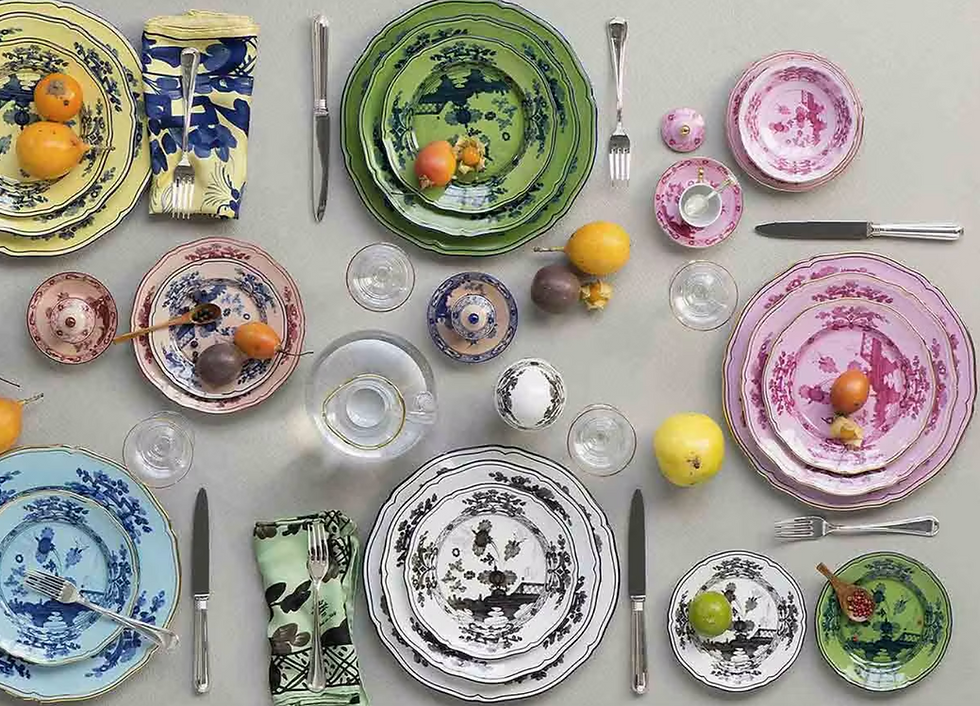
This distinction matters. While many European manufactories used porcelain to mimic aristocratic taste, Ginori approached it as a medium capable of holding history, mythology, architecture, and time. Classical reliefs were translated into tableware; Renaissance motifs were not referenced but studied; form followed proportion before ornament. The result was a body of work that felt inevitable rather than expressive. Heritage, here, is not nostalgia. It is transmission.
Across centuries, Ginori refined a paradox: industrial precision in service of cultural memory. Even as production scaled, the grammar remained intact. Plates echoed friezes. Vases carried architectural rhythm. Objects designed for daily use retained the dignity of museum pieces—without becoming untouchable. What distinguishes Ginori’s heritage is not age alone, but continuity of intention. Wars, political shifts, ownership changes—these altered context, not identity. The house never abandoned its dialogue with antiquity, nor its insistence that beauty must be disciplined to endure.
The Museo Ginori in Doccia stands as quiet proof. Its archives do not display evolution as rupture, but as accumulation. Forms recur, mutate, return. Motifs disappear only to re-emerge decades later, slightly rebalanced, as if the house itself were remembering.
In contemporary luxury, heritage is often reduced to narrative—a founding date printed discreetly beneath a logo. Ginori’s heritage operates differently. It is visible in weight, in glaze, in proportion. It is felt when an object does not demand attention, yet refuses to be ignored. Porcelain is fragile by nature. That Ginori has endured for nearly three centuries is not accidental. It reflects an understanding that longevity requires restraint: fewer gestures, better ones; fewer novelties, deeper roots.
Today, Ginori 1735 exists at a crossroads between craft and modernity, yet its compass remains fixed. It does not chase relevance; it practices coherence. Its objects do not attempt to represent the present moment. They position it within a longer arc.
True heritage does not announce itself.It simply remains—accurate, intact, and legible to those who know how to read it.




Comments